

A race lasts minutes. The story behind it takes years.
When the horses enter the track, everything appears simple.
The crowd becomes quiet. The gates open. Hooves hit the ground. A few minutes later, someone has won and someone has lost.
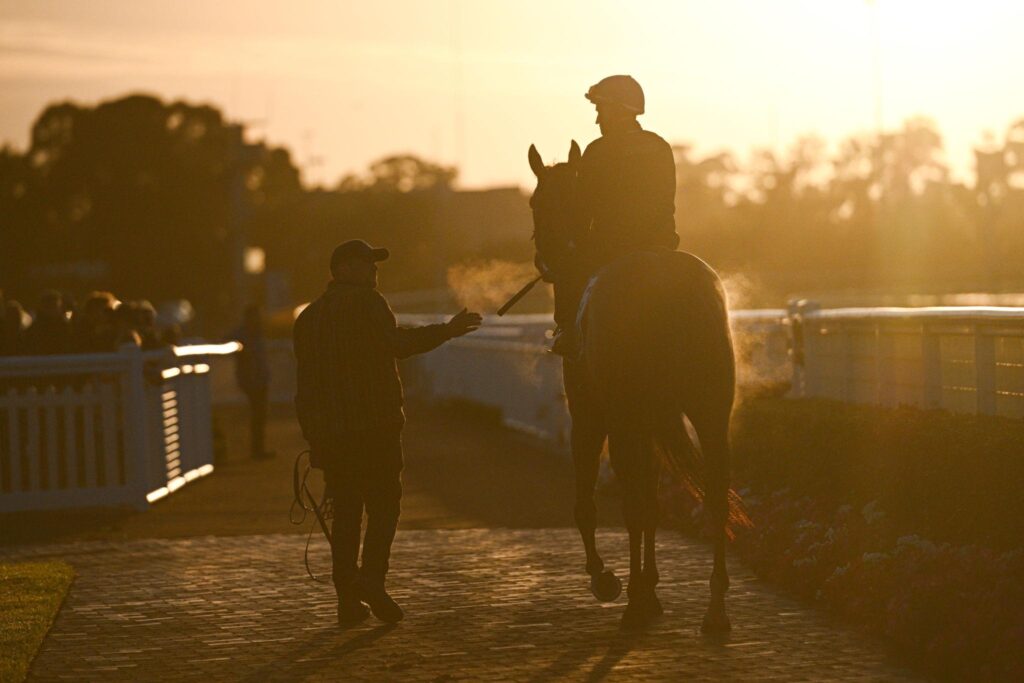
But a race is never really just those few minutes.
Behind every horse standing at the barriers is a network of trainers, jockeys, stable staff, breeders, owners, veterinarians and countless others who have spent months — sometimes years — preparing for that moment.
Before the Starting Gate
Long before a horse carries a jockey onto the track, its routine is carefully planned.
Training schedules, nutrition, recovery, fitness and race selection all play a role. Even small details can matter when horses are competing at elite levels.
For the people working behind the scenes, race day is therefore not the beginning of the story.
It is the moment when months of preparation finally become visible.
The People Behind the Horse
Horse racing is often presented through its most recognisable figures: the jockey in colourful racing colours, the trainer giving instructions or the owner celebrating beside the winner.
But thousands of less visible workers keep the industry moving.
Stable staff feed and care for horses. Track workers prepare racing surfaces. Veterinarians monitor animal health. Farriers look after hooves. Administrators, transport operators, photographers and event teams all contribute to the racing ecosystem.
Australian Thoroughbred racing supports approximately 75,000 jobs and has an estimated economic contribution of around $9.5 billion, according to Racing Australia. A significant share of that activity occurs in regional Australia.
The race may belong to the horse.
The industry belongs to many people.
Why the Details Matter
Horse racing has always been a sport of small details.
Even the colours worn by jockeys have a history. Racing colours were introduced partly so spectators could distinguish horses from a distance, and Australian racing developed an elaborate system of registered colours and patterns.
Today, those colours are instantly recognisable.
A jacket of particular stripes or a distinctive cap can become associated with a famous owner, trainer or champion horse.
What looks decorative from the grandstand can actually be part of racing’s identity.
More Than a Sporting Event
The Australian racecourse has also become a place where sport and culture meet.
Fashion, food, hospitality, entertainment and business now sit alongside the racing itself.
Flemington offers a particularly clear example. Its first race meeting was held in 1840, while the first Melbourne Cup was run in 1861. Over time, the venue developed from a rough racecourse beside the Maribyrnong River into one of Australia’s best-known sporting and entertainment venues.
That transformation explains why people who know little about racing can still feel connected to race day.
You don’t have to understand every form guide to appreciate the atmosphere.
The Changing Horse-Racing Business
The industry is changing too.
Technology is becoming increasingly important in training, performance analysis, broadcasting and fan engagement. Data can help trainers understand performance, while digital platforms have changed how audiences follow races and how businesses communicate with customers.
At the same time, racing faces a more complicated cultural conversation.
Modern audiences increasingly expect transparency around animal welfare, training practices and the long-term treatment of racehorses.
That means the future of racing cannot simply depend on tradition.
It has to earn attention and trust from a new generation.
The Magic Is in the Build-Up
Perhaps that is why horse racing remains fascinating.
The winning moment is only the visible part.
The real story is everything that happens before it.
The early mornings at the stable.
The sound of hooves during training.
The quiet decisions made by trainers.
The nerves of a jockey waiting behind the gates.
The owner watching from the grandstand.
The stable worker who knows the horse better than almost anyone.
Then, suddenly, the gates open.
For a few minutes, all those stories become one.
And when the race is over, the winner receives the attention.
But behind that winner is an entire world that most spectators never see.
The Race Is Only the Beginning
Australian horse racing has survived for generations because it has always been more than a sport.
It is an industry, a business, a social occasion and a deeply established part of Australian sporting culture.
Its future will depend on how successfully it can bring those traditions into a changing world.
Because when the horses enter the gates, the race may only take a few minutes.
The story behind it has already taken years.