

Why Australian racing is about more than the horses
In some Australian towns, race day is not simply something that happens at the local track.
It is something the whole community prepares for.
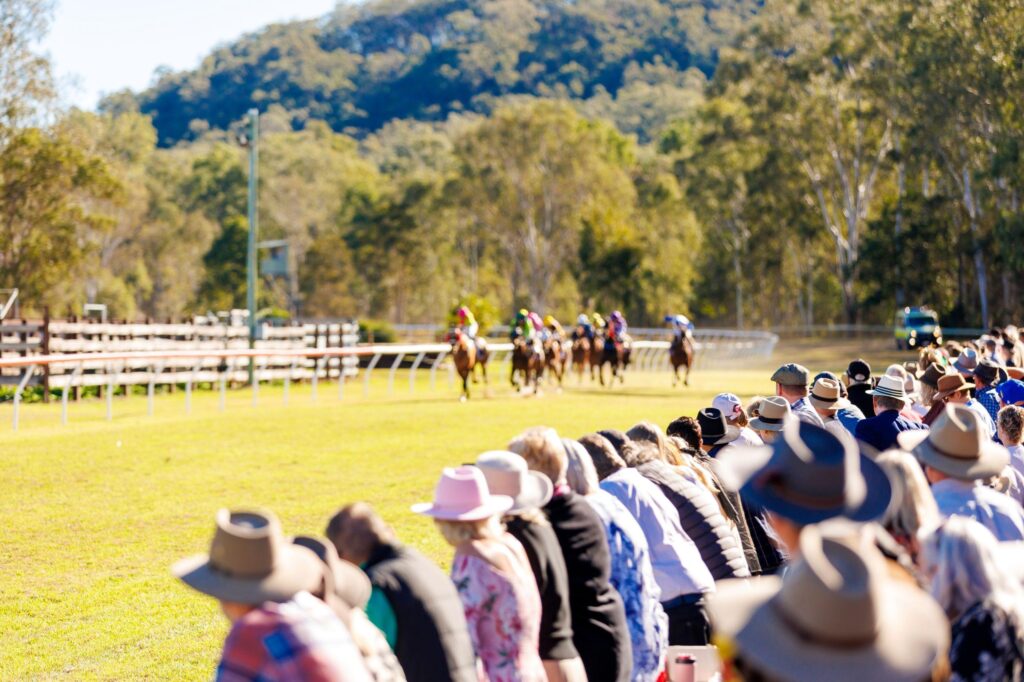
The bakery opens early. Hotels fill with visitors. Local businesses put up signs. Families make plans. Old friends return to town. For one afternoon, a race meeting can change the rhythm of an entire community.
That is one of the less visible stories of Australian horse racing.
Racing Beyond the Big Cities
When people think about Australian racing, the image is often Melbourne Cup crowds, packed metropolitan tracks and famous trainers.
But much of the industry exists far away from the major cities.
Racing Australia says 51 per cent of the industry’s economic activity is generated in regional Australia, while 63 per cent of people participating in the thoroughbred industry live in regional areas. The organisation also estimates that the industry supports about 75,000 Australian jobs.
For regional communities, therefore, the local racecourse can be much more than a sporting venue.
It can be part of the town’s identity.
A Day That Brings People Together
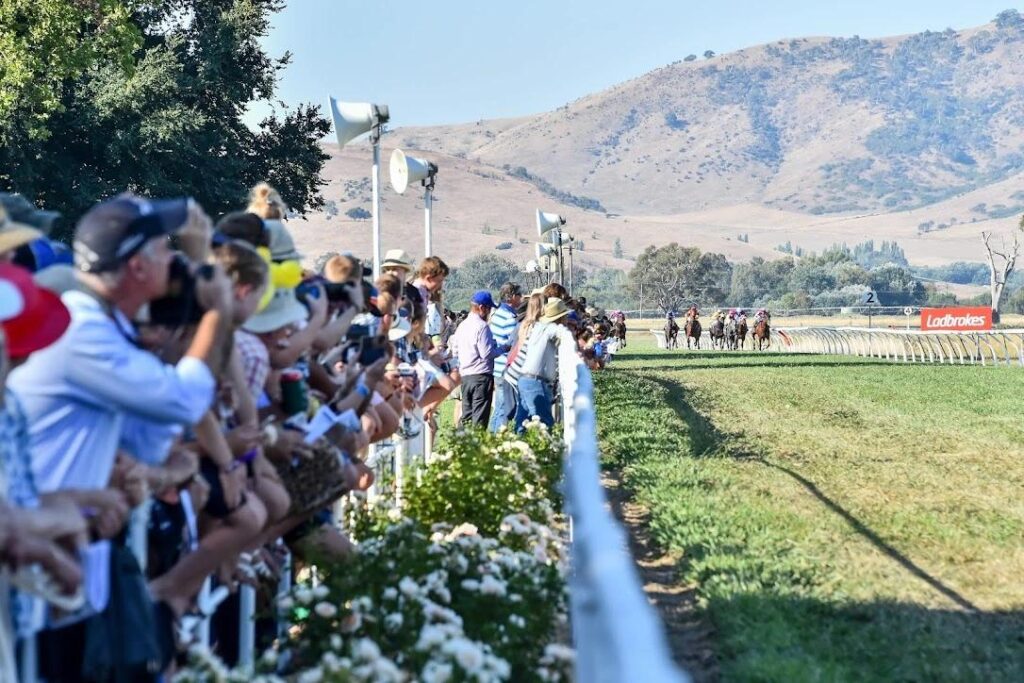
A country race meeting creates a different atmosphere from a major metropolitan carnival.
There may be fewer spectators, smaller facilities and less media attention, but there is often a stronger sense of familiarity.
People know the trainers.
They recognise the jockeys.
They know which families have been involved with horses for generations.
And when a local horse wins, the achievement can feel personal.
The winner is not simply a name on a results sheet. It might be a horse trained a few kilometres away or owned by someone the community has known for years.
The Businesses Around the Track
The economic impact does not stop at the gates.
Visitors need somewhere to eat. They may book accommodation, buy fuel, visit local shops or spend money at cafés and pubs.
The racing industry itself also supports a network of breeders, trainers, stable workers, veterinarians, farriers, transport operators and other businesses.
A national industry study found that Australia’s thoroughbred racing industry generated more than $9.1 billion in value-added economic impact and supported more than 71,000 full-time-equivalent jobs in the period studied.
The numbers reveal something easy to miss when watching a race on television:
A racehorse can support an entire ecosystem.
The Racecourse as a Meeting Place
There is another reason racing continues to matter in regional Australia.
It creates an excuse to gather.
Modern life can be increasingly fragmented. People work in different places, socialise online and move between communities.
A race meeting offers something physical.
People have somewhere to go.
They have a reason to dress up, meet friends, watch competition and spend an afternoon together.
The racecourse becomes a temporary town square.
Tradition, But Not Frozen in Time
That does not mean regional racing has stayed unchanged.
Australian racing is adapting to new audiences, new technology and changing economic conditions.
The industry is also facing questions about sustainability, animal welfare, participation and the future of betting.
Those conversations matter because tradition alone cannot guarantee a sport’s future.
Racing needs to remain relevant to the communities that support it.
The Future May Be Local
Interestingly, the future of Australian racing may depend as much on smaller communities as it does on major metropolitan events.
The big races attract international attention.
But hundreds of local meetings create the everyday rhythm of the industry.
Racing Australia says there are hundreds of thoroughbred racing clubs across the country, with the majority located in regional areas.
That means the future of racing is not being decided only at Flemington or Randwick.
It is also being shaped at small tracks where volunteers open the gates, local businesses support the meeting and families spend an afternoon together.
When the Last Race Is Over
Eventually, the horses leave the track.
The crowd goes home.
The gates close.
But the community does not simply forget the day.
For some, there will be another meeting next month. For others, preparations will begin for the next major local event.
That is the quiet strength of Australian racing.
The sport may be measured in winners, prize money and race times.
But in regional Australia, its importance can be measured another way:
by how many people have a reason to come together.
And sometimes, that may be the most important race-day result of all.